

Free vs VIP Signals: Why We Killed Our Own Paid Tier
Most signal groups charge $29-199/month. We made everything free instead. Here's the honest business logic behind that decision, and what it means for you.
§ Blog
Practical breakdowns on signal quality, risk management, and crypto futures workflow — written by the people who run the community.
Most signal groups charge $29-199/month. We made everything free instead. Here's the honest business logic behind that decision, and what it means for you.

Crypto funding rates explained simply: what they are, why perps need them, who pays whom, and how to check funding before holding a position overnight.

Learn how to follow crypto signals on Blofin step by step: set up an account, find the pair, read the signal, set entry and stops, and size your position.

Learn the risk reward ratio in crypto trading: how to compute R:R from entry, stop and target, and why the math lets you be right less than half the time.
Spot vs futures trading crypto explained for beginners: ownership vs contracts, leverage, going long and short, funding, liquidation, and fees.

Learn take-profit strategies for crypto trading: single vs multiple TPs, scaling out, moving stops to breakeven, and trailing stops to manage a trade.

BoS confirms a trend continues; CHoCH warns it's reversing. Learn to tell these two SMC signals apart and how to trade each one.

Candlesticks are the building blocks of every chart. Learn how to read them — open, close, wicks, and what green vs red really tells you.

Scalping, day trading, swing trading, or position trading? Learn which crypto trading style fits your schedule and personality as a beginner.

Most blown accounts come from the same handful of avoidable mistakes. Here are 10 of the most common — and how to stop making them.

Fair Value Gaps mark price inefficiencies the market tends to fill. Learn to spot bullish and bearish FVGs and the classic setup that uses them.

AI trading signals get hyped and misunderstood in equal measure. Here's an honest look at what they are, what they can't do, and how we use them.

The trend is your friend — but only if you can read it. Learn to spot uptrends, downtrends, and ranges using highs and lows.
New to trading signals? Learn exactly what entry, take-profit, and stop-loss mean, and how to act on a signal without blowing up your account.

Scammers clone crypto brands every day. Here's exactly how to confirm you're dealing with the real Ascendant Traders and not an impersonator.

Isolated and cross margin behave very differently when a trade goes wrong. Here's the difference and which one beginners should use.
Leverage is the most misunderstood concept in futures. Learn what it really does, how liquidation happens, and how to use leverage without blowing up.

In crypto futures you can profit whether price rises or falls. Here's how going long and going short actually work, in plain language.

Order blocks mark where institutions left orders; breaker blocks are flipped order blocks. Learn to spot both and use them for entries.

Position sizing is where most traders quietly lose money. Learn the simple formula that ties your stop loss to a fixed, survivable risk.
The single most important trading skill isn't picking winners — it's managing risk. Learn the 1-2% rule and why it keeps your account alive.

Smart Money Concepts try to spot where institutions trade so you can follow them. Here's an honest beginner's overview of the core SMC tools.
Forget the endless app lists. Here are the only four tools a crypto trader really needs to get started — and the job each one does.

Trading is 80% psychology. Learn the four emotions — greed, fear, hope, and revenge — that destroy traders, and how to keep them in check.

Most signal services only show their wins. Here's why we publish our losses on purpose — and why you should be suspicious of anyone who doesn't.

A proper trading journal is the single highest-ROI upgrade a signal follower can make. Here's exactly what to track, what to ignore, and the specific format that survives past the 2-week abandonment point.
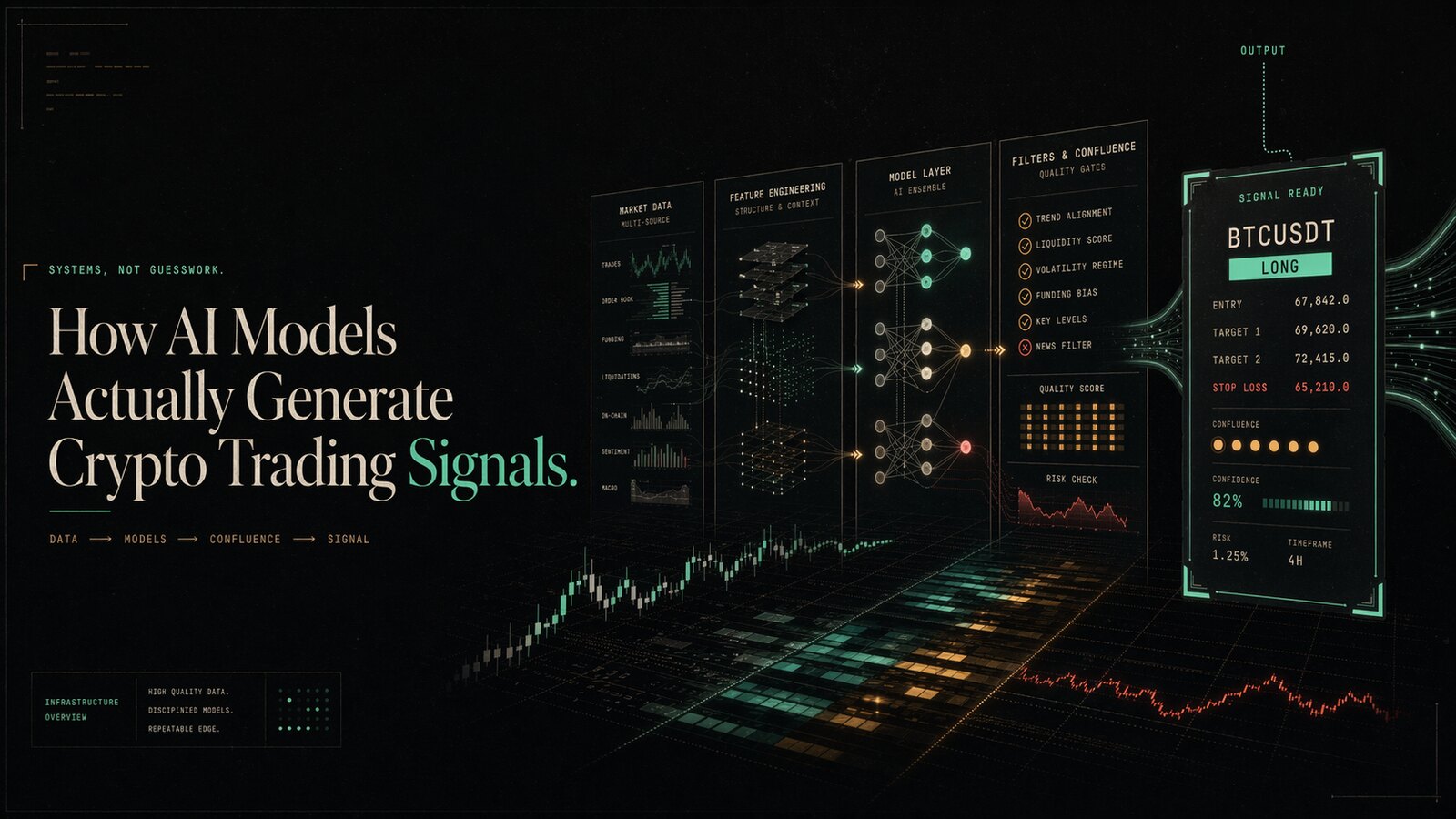
Everyone claims 'AI-powered' signals. Few explain what that actually means. Deep-dive into the real pipeline: data ingestion, indicator confluence, signal filtering, and the infrastructure that separates real AI systems from marketing.

The signal is 30% of a trade. Position sizing is most of the other 70%. Complete guide to calculating size, setting leverage, and surviving losing streaks — with real BTC, ETH, SOL examples.

The signal is 30% of a trade. Your psychology is 70%. Here's the complete breakdown of the 7 mental traps that destroy subscribers — and the specific countermeasures that actually work.

The 95% failure rate isn't a myth — it's documented across multiple studies. Here's what the data actually shows, why most traders lose systematically, and the five habits that separate survivors from casualties.

Bots promise hands-off automation. Signal groups promise human judgment + community. We break down both honestly — the math, the hidden costs, the scams, and which one actually makes sense for traders in 2026.
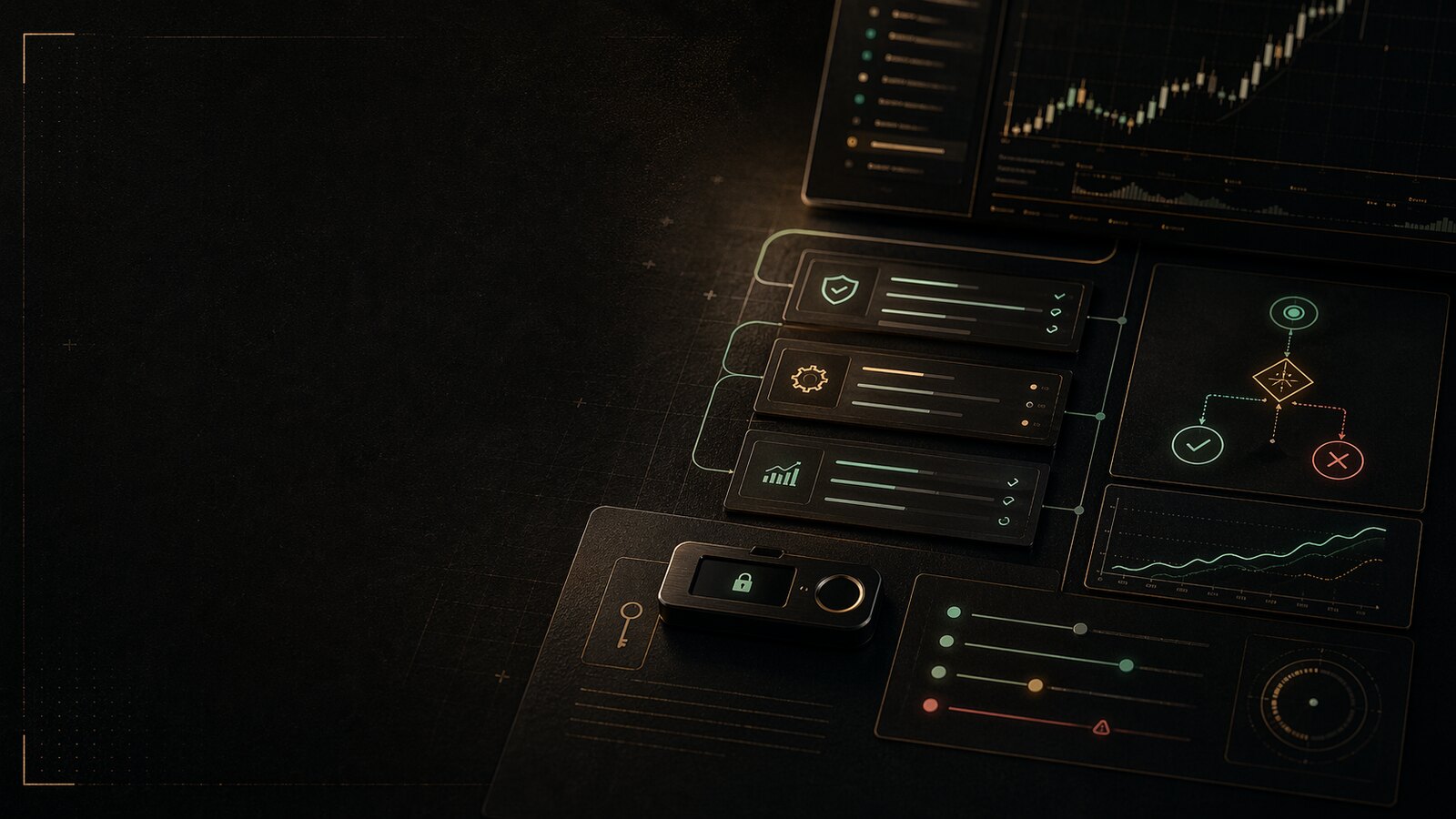
Auto-trading crypto signals sounds easy. The reality involves API key security, permission risks, slippage, and a dozen other hidden landmines. Here's the complete guide to doing it without losing your account.
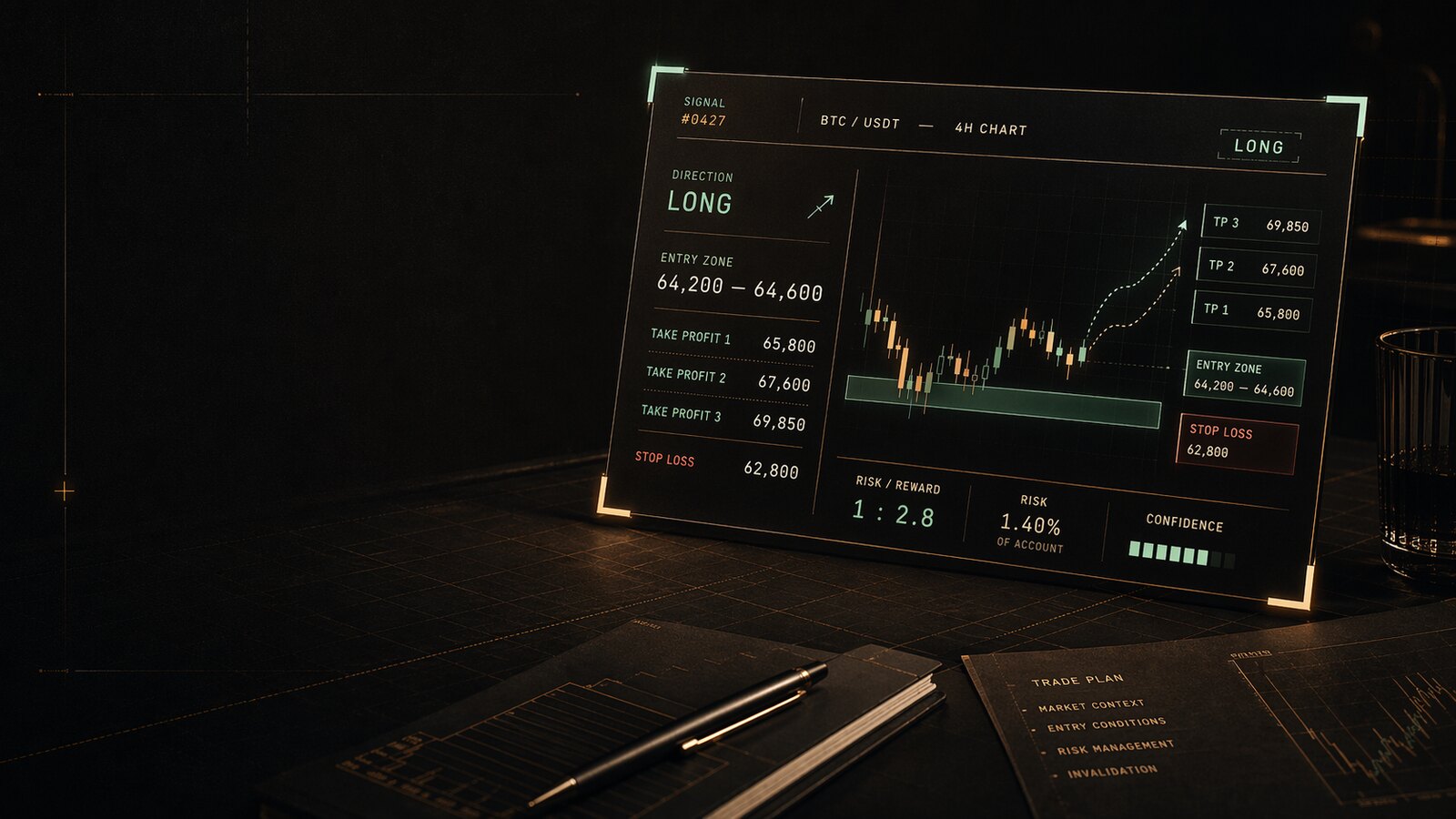
Every crypto signal follows the same anatomy. Learn to decode entry, targets, stop-loss, and risk/reward with a real BTC example — plus the 7 mistakes that destroy new traders.
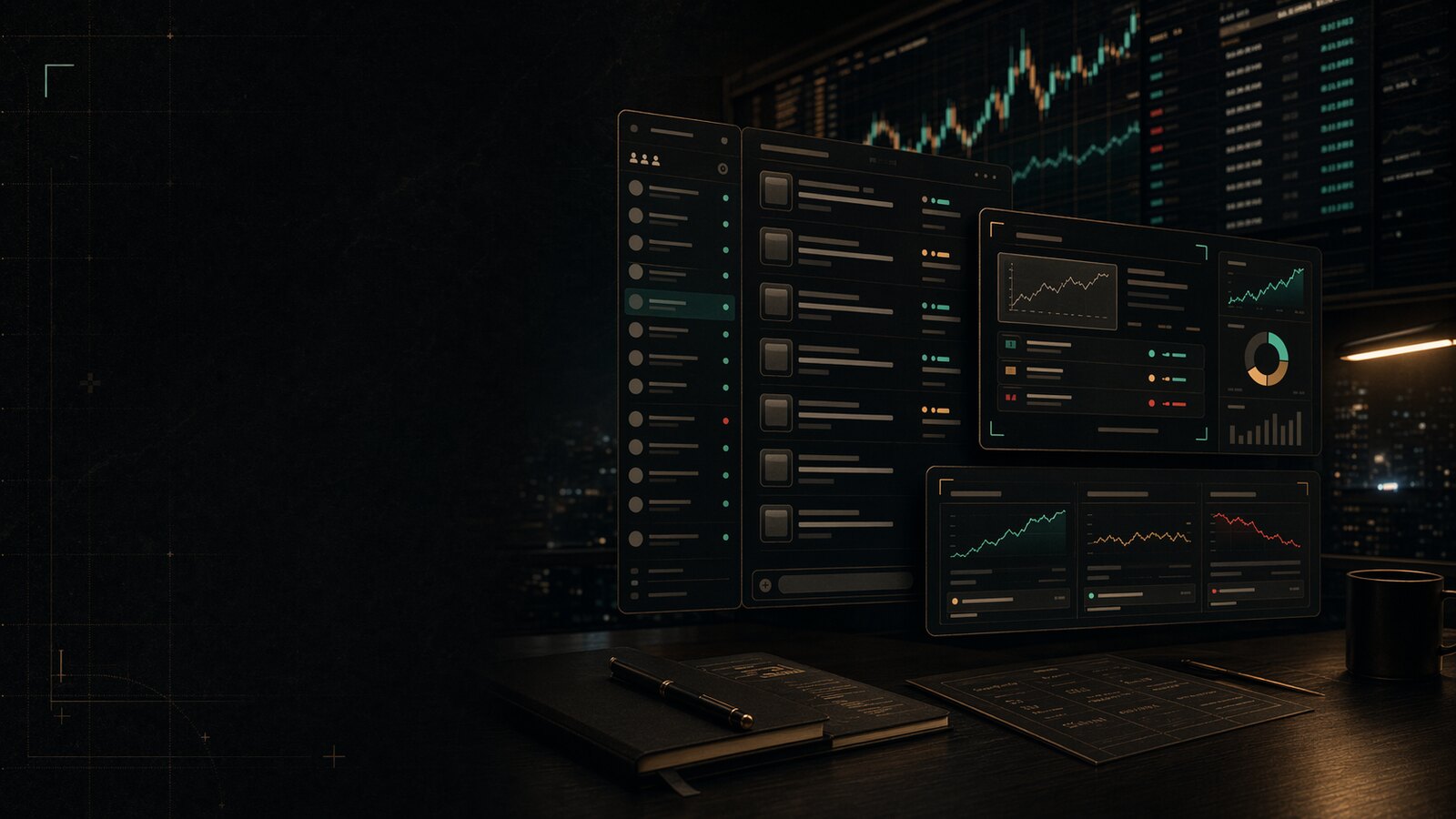
A practical framework for evaluating AI crypto signal communities before you pay for access.
A practical review of Blofin for futures traders focused on execution speed, fees, and workflow fit.
How to separate serious free crypto signal communities from recycled content and late calls.